
Most teas announce themselves with aroma. Butterfly pea flower tea announces itself with colour — a deep, vivid, completely natural blue that looks almost too striking to come from a flower. Yet that is exactly where it comes from: small, indigo-blue blossoms that have been steeped in homes across South and Southeast Asia for generations.
If you have ever seen a photo of “blue tea” and wondered what it is, what it tastes like, and whether the colour is real, this guide answers all of it. We will cover where butterfly pea flower tea comes from, why it is naturally blue, how it tastes, how to brew it properly, and how to recognise good quality flowers when you buy them.
What Is Butterfly Pea Flower Tea?

Butterfly pea flower tea is a caffeine-free herbal infusion made from the dried flowers of Clitoria ternatea, a climbing vine native to South and Southeast Asia. The plant produces delicate, deep-blue petals that are harvested, gently dried, and steeped whole in hot water — no leaves, no processing tricks, just the flower itself.
The tea has a long history in the region’s everyday life. In Thailand it appears as nam dok anchan, a chilled blue drink served with lime and honey. In Malaysia the flowers colour traditional rice dishes. And across Bangladesh, butterfly pea — known locally as aparajita — has climbed garden fences and rooftop trellises for generations, brewed at home long before it ever appeared on café menus. It is one of the botanicals our own family has grown for decades, which is part of why it sits at the heart of what we do at Velora.
Because it comes from a flower rather than the tea plant (Camellia sinensis), butterfly pea tea is technically a tisane, or botanical infusion. In practice, everyone calls it tea — and more often than not, simply “blue tea.”
Why Is It Blue? The Natural Colour Explained
The colour is not a dye, and nothing is added. Butterfly pea petals are exceptionally rich in anthocyanins — the same family of natural plant pigments that make blueberries blue and red cabbage purple. When the dried flowers meet hot water, these pigments release freely, turning the water a saturated royal blue within minutes.
What makes butterfly pea special is how much pigment the petals hold and how stable the colour is in plain water. A handful of flowers can colour an entire teapot, and the blue holds beautifully whether the tea is served hot or iced.
There is a second act to this story: add a squeeze of lemon and the blue transforms into violet, then pink, right in front of you. The chemistry behind that colour change deserves its own explanation, and we cover it fully in a separate article.
What Does Butterfly Pea Tea Taste Like?
This is the question most first-time drinkers ask, and the honest answer is: far gentler than the colour suggests. Butterfly pea tea tastes lightly earthy and subtly floral, with a smooth, almost silky body and none of the bitterness or astringency you might expect from green or black tea. Some people notice a faint sweetness reminiscent of green pea or fresh chamomile.
Its mildness is actually its strength. Because the flavour is soft and clean, butterfly pea tea pairs beautifully with other ingredients — a slice of lemon, a spoonful of honey, a few mint leaves, or a stalk of lemongrass. It also makes a stunning base for iced drinks and lattes precisely because it colours everything it touches without overpowering the taste.
If you enjoy delicate herbal infusions like chamomile or lemongrass, butterfly pea will feel familiar. If you usually drink strong milk tea, think of it as the calm, quiet counterpart in your cup collection.
Is Butterfly Pea Tea Caffeine-Free?
Pure butterfly pea flower tea is naturally caffeine-free, because it is made from the flower rather than the tea plant (Camellia sinensis). That makes it a natural choice for evenings, for anyone reducing caffeine, and for moments when you want a warm ritual without the buzz. You can enjoy a cup after dinner without thinking twice.
How to Brew Butterfly Pea Flower Tea
Brewing butterfly pea tea is wonderfully forgiving. The flowers release their colour quickly, do not turn bitter if you steep a little long, and work equally well hot or iced. Here is the simple method we recommend.
Iced Brew
- Brew a double-strength cup using 10–12 flowers in the same amount of hot water.
- Steep 5 minutes, strain, and let it cool slightly.
- Pour over a full glass of ice and sweeten to taste.
- Finish with lemon or lime just before serving — the drink will turn a vivid violet-pink over the ice.

Hot Brew
- Add 5–7 dried whole flowers to a cup or small teapot.
- Pour hot water at around 90–95°C (just off the boil).
- Steep for 4–5 minutes, until the water turns a deep royal blue.
- Remove the flowers and enjoy as is, or add honey and a twist of lemon — and watch the colour shift.

These are the two foundations. Once you are comfortable with them, there is a whole world of layered drinks, sparkling coolers, and colour-changing lemonades to explore — we share our favourite recipes in a dedicated brewing article.
How to Choose Quality Butterfly Pea Flowers
Not all butterfly pea flowers are equal, and the difference shows up directly in your cup. When you are choosing flowers — from any brand — here is what to look for:
- Whole flowers, not crushed petals. Whole blossoms keep their pigments and delicate aroma intact; crushed or broken petals often signal rough handling and brew a duller colour.
- Deep, saturated blue. The dried flowers themselves should look richly blue-violet. Faded or brownish petals usually mean the flowers were dried at high heat or stored poorly.
- Careful, low-temperature drying. Anthocyanins are heat-sensitive, so flowers dried gently at lower temperatures tend to keep more of their colour and character than flash-dried ones.
- Nothing added. The ingredient list should be exactly one item: butterfly pea flowers. No colourants, no flavourings, no preservatives — the flower needs no help.
- Protective packaging. Light, oxygen, and moisture slowly fade both colour and freshness. Opaque, well-sealed pouches preserve the flowers far better than clear bags on a sunlit shelf.
These are the same standards we hold ourselves to at Velora — from how our flowers are dried to how they are packed — because the difference truly is visible the moment hot water touches the petals.
A Flower with Heritage
Long before butterfly pea tea appeared in international cafés and social feeds, it was simply part of daily life across South and Southeast Asia — growing along fences, climbing rooftop trellises, brewed in family kitchens without ceremony.
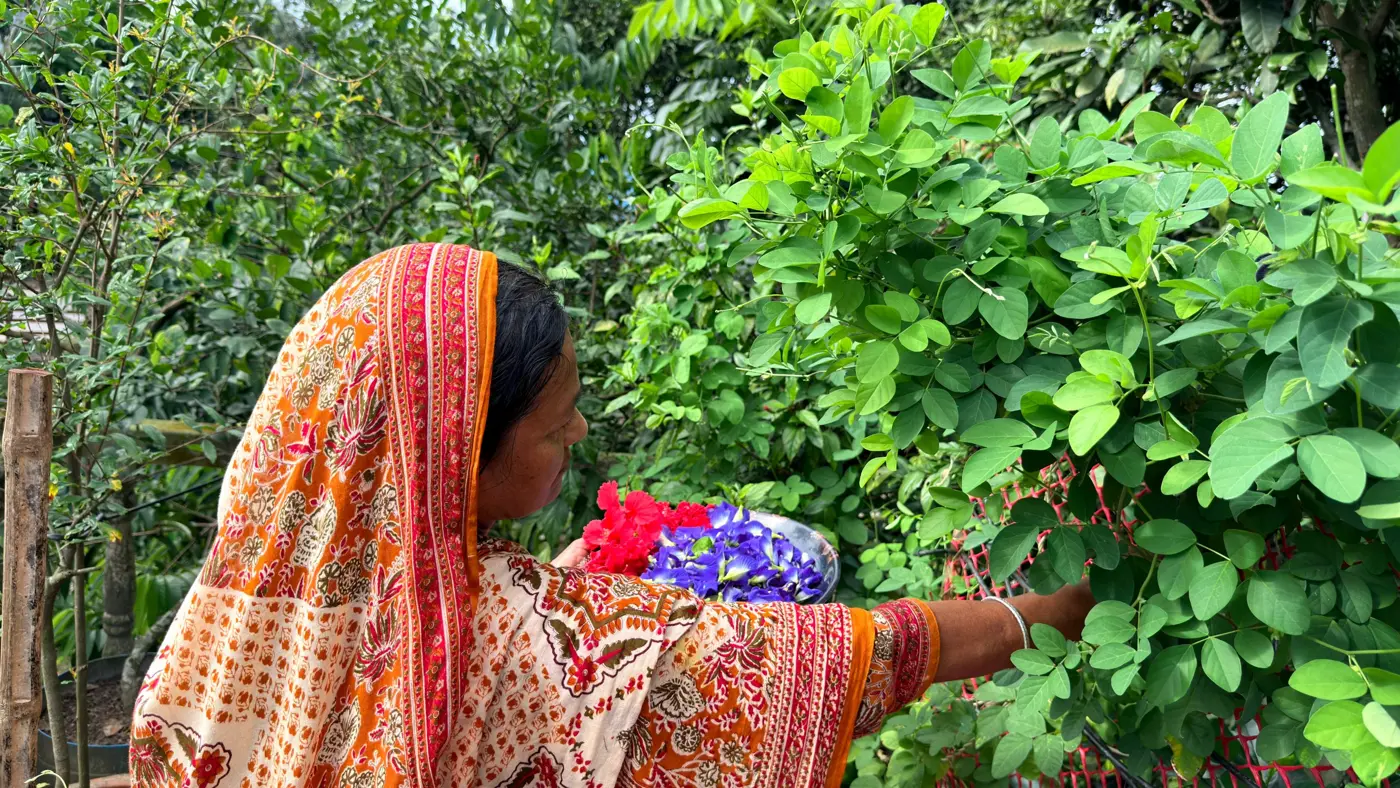
That is exactly how our own story with this flower began: on a rooftop garden in Bangladesh that our mother has tended for more than thirty years, where butterfly pea grew alongside roselle, mint, and lemongrass. What was once an everyday family ritual is now the foundation of everything Velora makes.
Frequently Asked Questions
Can I drink butterfly pea tea every day?
Butterfly pea flower tea has been part of everyday tea culture across South and Southeast Asia for generations, and because it is naturally caffeine-free, there is no caffeine limit to think about. As with any herbal infusion, if you are pregnant, breastfeeding, or taking regular medication, check with your doctor before making it a daily habit.
Why does the colour change when I add lemon?
The natural blue pigments in the petals are sensitive to acidity. When lemon juice lowers the pH of your cup, the pigments shift from blue to violet to pink. It is pure, visible chemistry — and we explain exactly how it works in our colour-change article.
Does butterfly pea tea stain cups or surfaces?
Butterfly pea’s natural pigments can leave a temporary tint on some surfaces, much as black tea or coffee can. Cups and teapots clean up easily with normal washing, and an occasional scrub with baking soda removes any lingering colour. Do wipe spills on light fabrics promptly, as the pigment is a genuine natural dye.
Can I mix butterfly pea with other teas or herbs?
Absolutely — it is one of the most blend-friendly botanicals there is. Lemongrass, mint, ginger, and chamomile all pair beautifully. You can also blend it with green tea, though the colour will lean teal rather than pure blue. Its mild flavour means it complements rather than competes.
How should I store butterfly pea flowers?
Keep them in an airtight, opaque container away from sunlight, heat, and moisture — a sealed pouch inside a cupboard is ideal. Stored well, dried flowers keep their colour and character for many months. If the flowers start looking faded, the brew will look faded too.
Ready to Meet the Blue Flower?

Butterfly pea flower tea is one of those rare things that is exactly as magical as it looks — a caffeine-free, naturally blue infusion with a gentle taste, a colour-changing party trick, and centuries of quiet heritage behind it. Now that you know what it is and how to brew it, the only thing left is to experience that first pour of royal blue for yourself.
Taste the blue for yourself
Butterfly pea flowers from my mother’s rooftop garden, hand-picked and slow-dried.
Shop Blue Bloom